

Throwing Off the Shackles of the Marketplace: Building an Agile, Independent D2C Store in the Digital Era
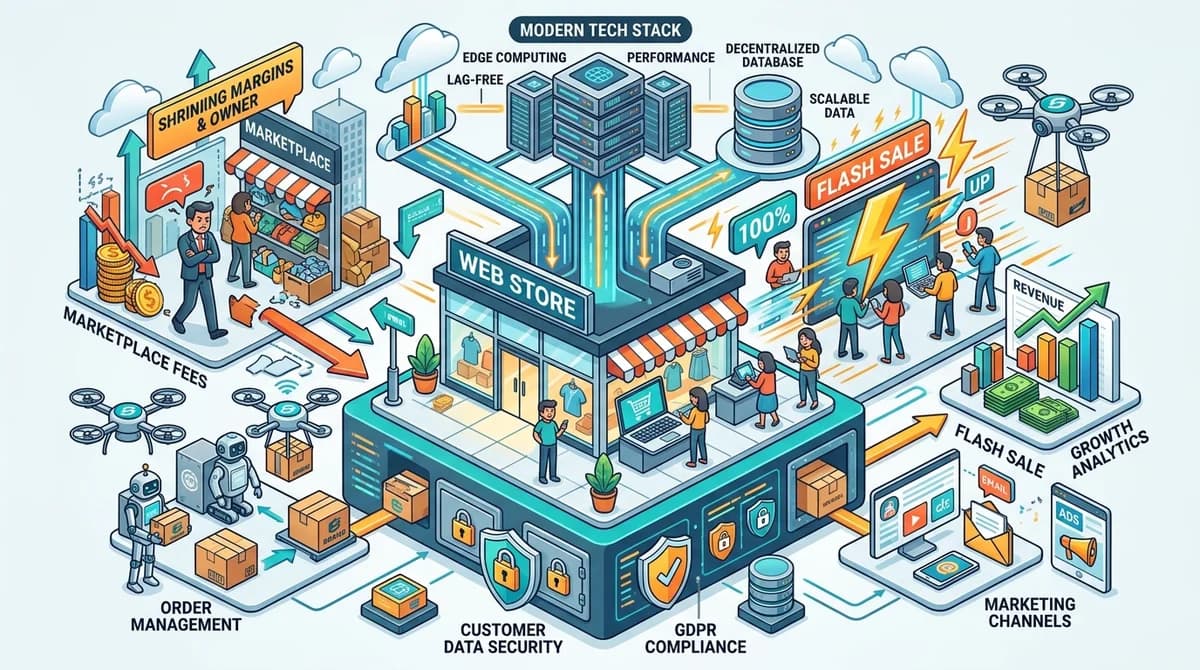
Imagine you are a local brand owner who has just celebrated the highest sales record in a large marketplace. However, when the monthly financial report landed on the table, that smile slowly faded. After deducting the increasing admin costs, service fees, and internal advertising commissions, the net profit figures are not as beautiful as the turnover figures on the dashboard. This phenomenon is not just the complaint of one or two people; this is the harsh reality driving a new wave in retail: the rise of the standalone Direct-to-Consumer (D2C) model.
D2C strategy is no longer just a fad to have your own .com domain. In the midst of an increasingly competitive digital ecosystem, having your own sales channel is both a defensive and offensive step to save increasingly thinning profit margins. However, the biggest challenge is: can our independent site match the convenience and speed of the marketplace giants?
The Marketplace Paradox and the Need for Independence
Many brands are trapped in dependence on marketplaces because their infrastructure is already mature. However, this dependency carries major risks. Apart from admin fees which can reach dozens of percent, you don't really "own" your customers. Their behavioral data, emails and preferences remain tightly stored on third party servers.
"Data is the new oil, but in a marketplace ecosystem, you only rent the land without ever owning the rights to the well."
Building a standalone D2C store means taking full control. However, to win, brands must not just "make a website". Modern consumers are highly intolerant of delays. Studies show that just one second of loading delay can reduce conversions by up to 7%. This is where modern technology takes a key role.
Building a Seamless Architecture with Edge Networking
If in the past building an e-commerce website meant renting a physical server far away, now the era has changed. Local brands are now starting to look at frontend frameworks based on edge networks such as Next.js or Remix which are deployed on platforms such as Vercel or Cloudflare.
The advantage? Your store content is no longer sent from one data center in Jakarta or Singapore, but is distributed to hundreds of points throughout the world (or all corners of Indonesia) that are closest to the user's location. The result is almost instant access speed, as if the website were running directly in the customer's cellphone memory.
This technology is also a savior during flash sale moments. Imagine thousands of people logging into your site at the same time. Traditional architectures often collapse due to the burden of centralized servers. However, with edge computing, the load is distributed evenly, ensuring the site remains stable and crash-proof when traffic spikes occur.
Decentralized Database and Uncompromising Security
Managing your own shop means taking a big responsibility for the security of customer data. In an era of increasingly stringent data protection regulations, the use of modern distributed and encrypted databases has become an obligation, no longer an option.
Serverless (serverless) databases enable automatically scalable performance. You don't need to worry about the server breaking because the database will dynamically adjust its capacity to the number of transactions. In addition, the security of transaction data and personal information can now be protected with advanced authentication protocols that are much more difficult to penetrate than conventional content management systems.
Strategic Steps Towards D2C Transition
Starting the transition to D2C doesn't have to be taken to the extreme of leaving the marketplace immediately. A hybrid approach is often the wisest. Use the marketplace as a new customer acquisition funnel, then direct them to make their next purchase through your independent web-store with the lure of loyalty points or exclusive products.
Here are some of the key pillars in building a robust D2C ecosystem:
- Choose Headless Technology: Separate the frontend and stock management system (backend) for maximum flexibility.
- Mobile-First Optimization: Ensure the shopping experience on mobile is smoother than using marketplace apps.
- Unified Payment Integration: Use a local payment gateway that supports QRIS and various e-wallets for easy transactions.
- Data Ownership: Make sure every customer interaction is recorded in your internal CRM (Customer Relationship Management) system.
Ultimately, building a standalone D2C store is about building long-term business sustainability. In a world where marketplace algorithms can change at any time and admin costs continue to soar, having your own digital "home" is the best investment to stay close to customers while securing your brand's financial future. Start building today, before your margin runs out.
P.S. In addition to setting up an independent store, learn how to build a loyal customer ecosystem through community-led growth strategies for D2C brands.
Comments
Share your thoughts or questions
Leave a Comment